


June 18, 2026
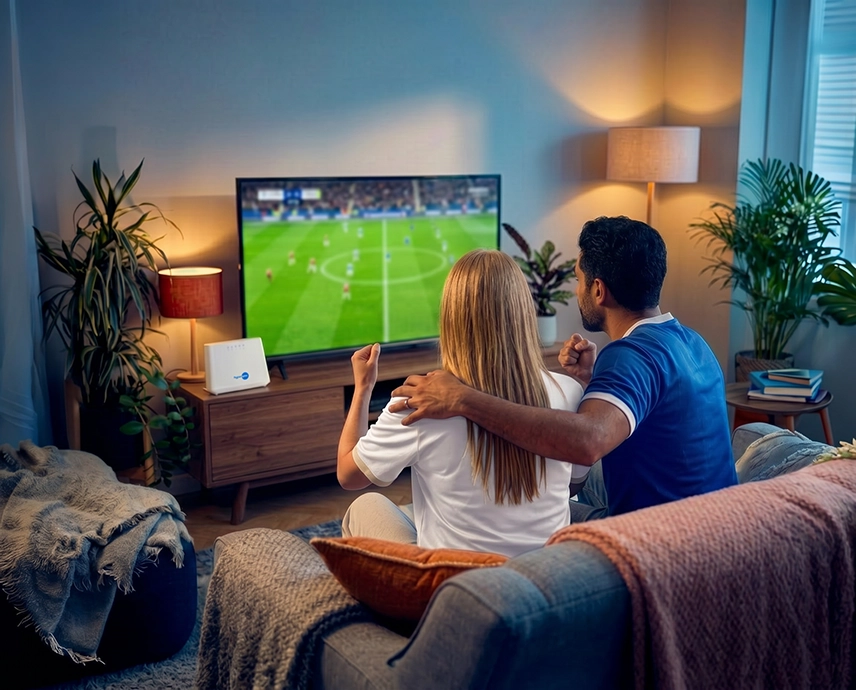 New research from Hyperoptic reveals how fans are planning to watch football at home this summer, as the provider tracks how live sport affects broadband demand.
- Tournament match nights are driving some of the highest network traffic spikes Hyperoptic has seen this month, with the biggest match night so far peaking at around 1.8Tbps, nearly 30% higher than a typical early June Wednesday evening peak.
- During England’s opening fixture, traffic climbed sharply from around 8pm, around an hour before kick-off, peaking at approximately 1.6Tbps, around 15% higher than a typical early June Wednesday evening peak.
- The England match created a distinctly “match-shaped” evening on Hyperoptic’s network, with a clear dip at half-time and traffic remaining elevated after the final whistle.
- Hyperoptic research found that 68% of football viewers go to the loo at half-time, 57% make food or get a snack, 24% message friends and 23% scroll social media.
- Over 1 in 4 (29%) of UK adults with home broadband say buffering during a goal, penalty, or key moment would be one of the most frustrating things to happen during a major match.
- Around 3 in 5 football viewers have found out about a goal or key sporting moment before seeing it on their own screen.
- A third of football viewers message friends or family while watching live football, while 29% scroll social media.
- As fans prepare for a summer of live sport, Hyperoptic is sharing advice to help fans avoid buffering and stay connected during key moments.
For fans watching this summer’s international football tournament, the matchday experience is no longer just about what happens on the pitch. It is also about whether the stream holds up, whether a phone notification gives away the score, and how many other devices are competing for bandwidth at home.
Hyperoptic, the award-winning full fibre broadband provider, has seen tournament match nights drive some of the highest network traffic spikes recorded on its network so far this month, as millions of fans tune in from home. During the opening fixture of the tournament, Hyeroptic recorded peak network traffic around 10% higher than a typical Wednesday evening.
Early analysis shows a typical early June Wednesday evening peak was around 1.4Tbps. By comparison, the biggest tournament match night so far peaked at around 1.8Tbps, nearly 30% higher, while England’s opening fixture on the 17th June, peaked at approximately 1.6Tbps, around 15% higher.
England’s opening match also created a distinctly “match-shaped evening on Hyperoptic’s network. Traffic climbed sharply from around 8pm, an hour before kick-off, before dipping clearly at half-time and remained elevated until after the final whistle. No other evening in the preceding week showed the same mid-peak notch, suggesting broadband demand closely followed the rhythm of the match.
This pattern reflects new research from Hyperoptic into how fans behave during live football. According to the survey, 68% of football viewers go to the toilet at half-time, 57% make food or get a snack, 24% message friends and 23% scroll social media. The research suggests that home broadband will continue to play a central role throughout the tournament.
According to the survey of 2,000 UK adults with home broadband, 3 in 5 (60%) plan to watch this summer’s football tournament. Among these, almost 9 in 10 (86%) expect to watch most matches at home.
For fans watching from the sofa, the biggest frustrations are not just what happens on the pitch, but what happens on the screen. Over one in four (29%) UK adults with home broadband say buffering during a goal, penalty, or key moment would be one of the most frustrating things to happen during a major match. And for some, that frustration has already become a reality, with over 1 in 10 (11%) saying they have missed a key sporting moment because of buffering, lag or connection issues.
The research also points to the risk of live sport spoilers, with around 3 in 5 football viewers having found out about a goal or key sporting moment before seeing it on their own screen. The findings suggest football is increasingly a second-screen experience, with a third of football viewers messaging friends or family while watching live football, and 29% scrolling social media.
During major live sporting events at home, an average of 2.7 internet-connected devices are usually in use in the household at the same time, underlining the pressure placed on home broadband during major sporting moments.
Mark Bartlett, COO at Hyperoptic, said: “This summer is a big moment for football, and millions of people will be watching, reacting and connecting at the same time. England’s opening win showed exactly how major live football moments can shape home broadband demand. Early analysis shows tournament match nights are driving some of the highest network traffic spikes we’ve seen this month, with the biggest match night so far nearly 30% higher than a typical early June Wednesday evening peak.
“What is particularly interesting is how closely demand follows the rhythm of the match. During England’s opening fixture, traffic climbed sharply ahead of kick-off, dipped at half-time and remained elevated after the final whistle. That mirrors how fans behave at home, from streaming the match and messaging friends, to scrolling social media, ordering food or using other connected devices during key moments. All of these elements will slow down broadband. Simple steps like pausing large downloads, checking what else is connected and making sure the router is free of obstructions can make a real difference during key fixtures.”
Hyperoptic is also pausing non-essential Planned Engineering Works during England and Scotland matches throughout the tournament to help maintain network stability during key fixtures. The provider will continue monitoring its network around major match moments, with teams on hand to respond as the tournament progresses. This summer, Hyperoptic is in your corner, so fans can focus on the football.
Hyperoptic was named a Which? Great Value Broadband Provider, April 2026.